
Last updated October 31, 2026
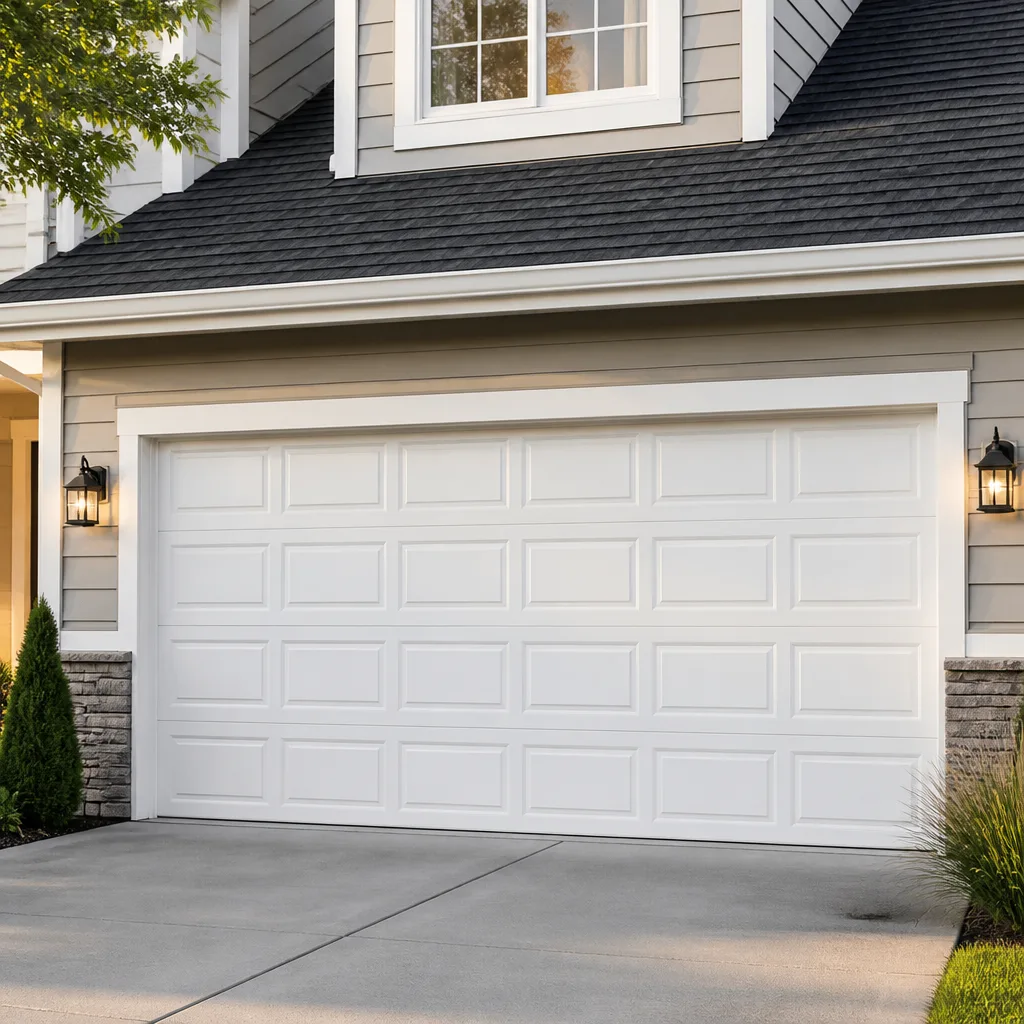 Raised-panel steel
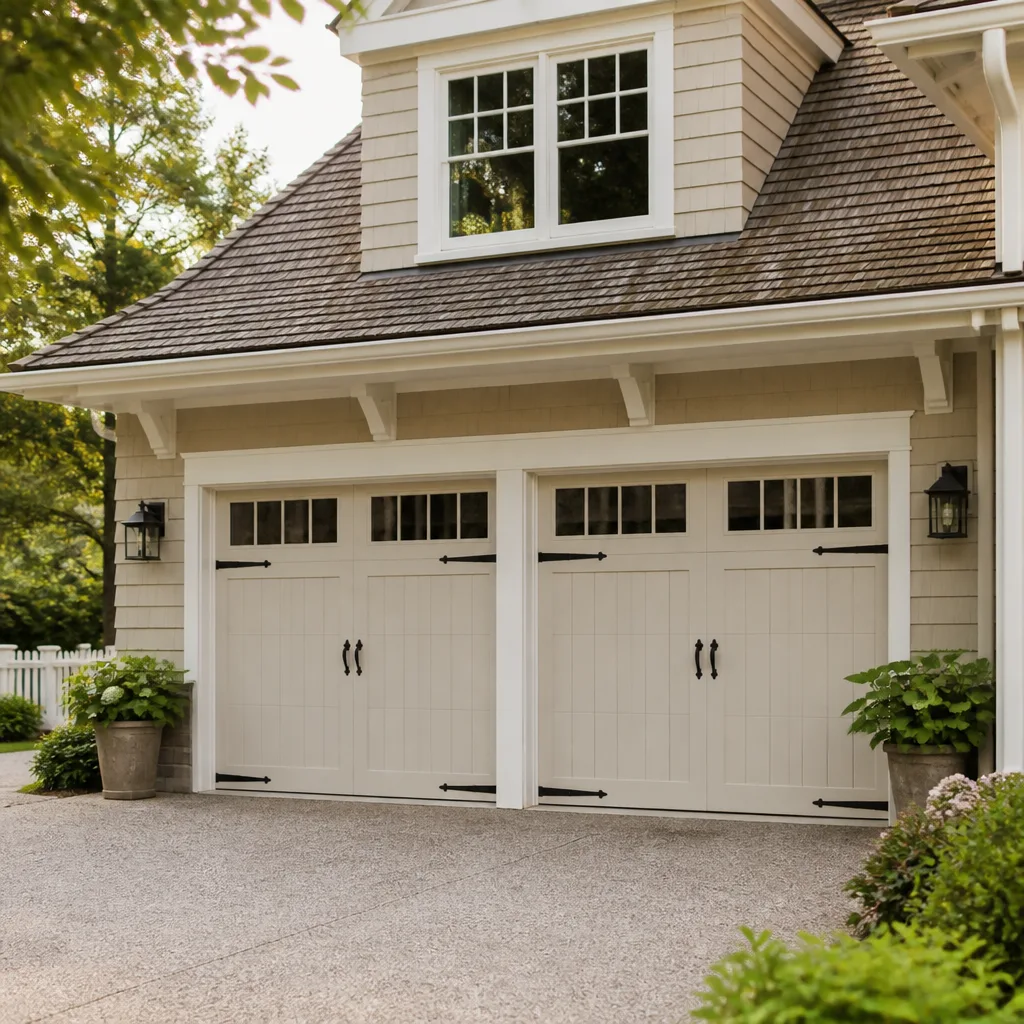 Carriage house
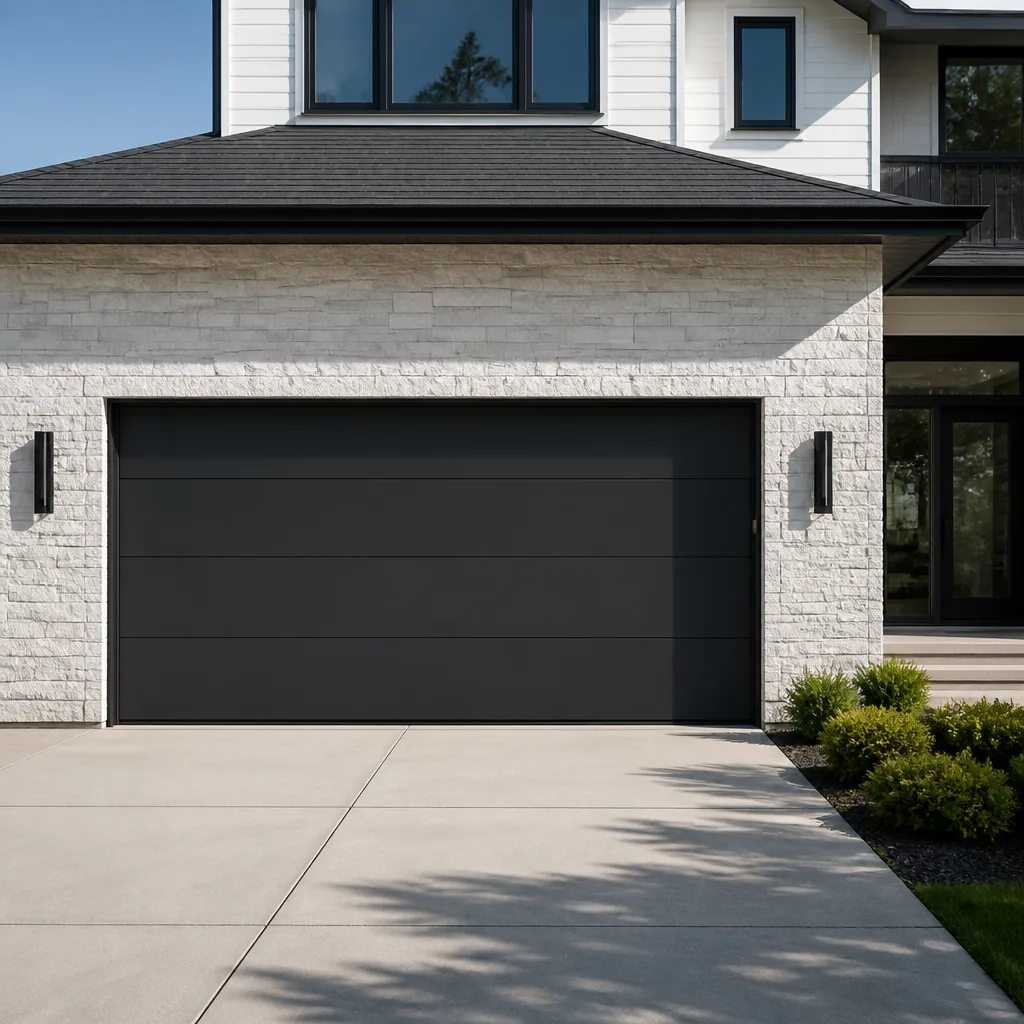 Modern flush
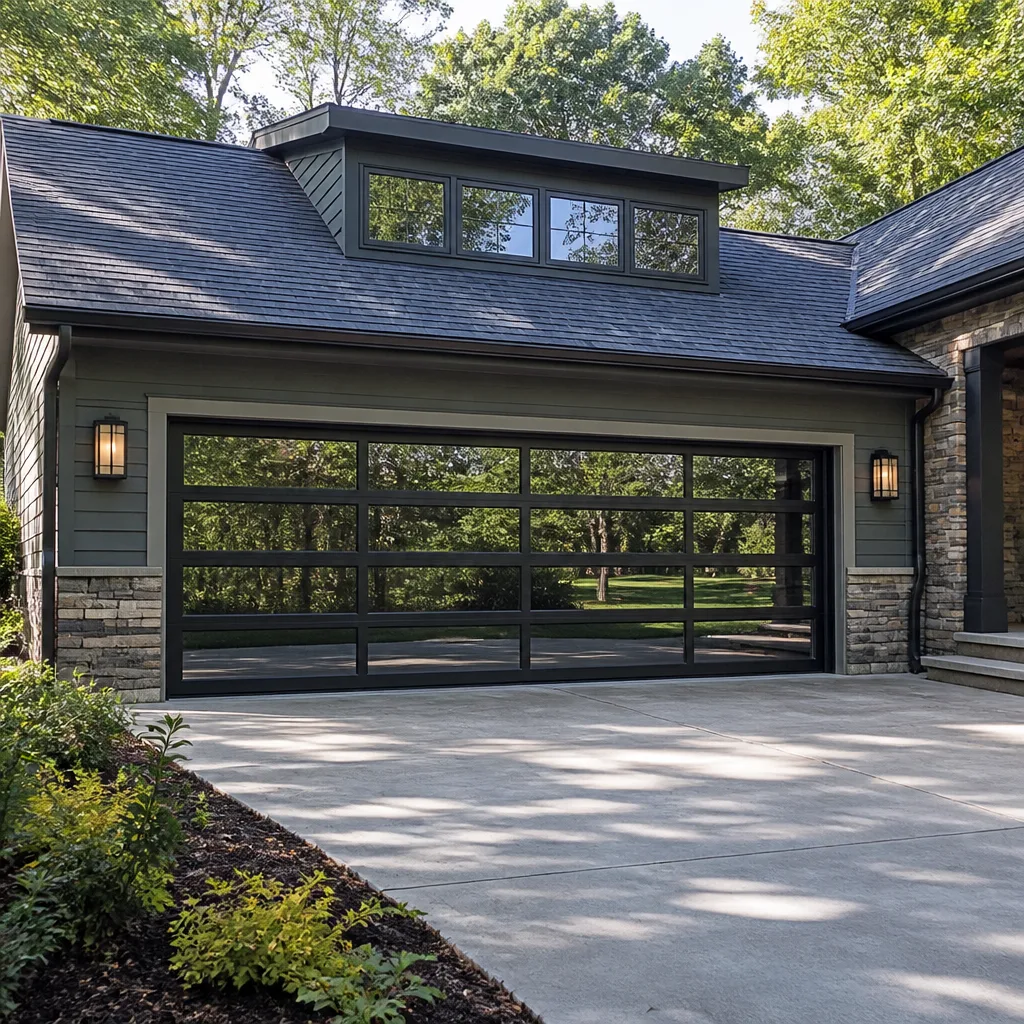 Full-view glass
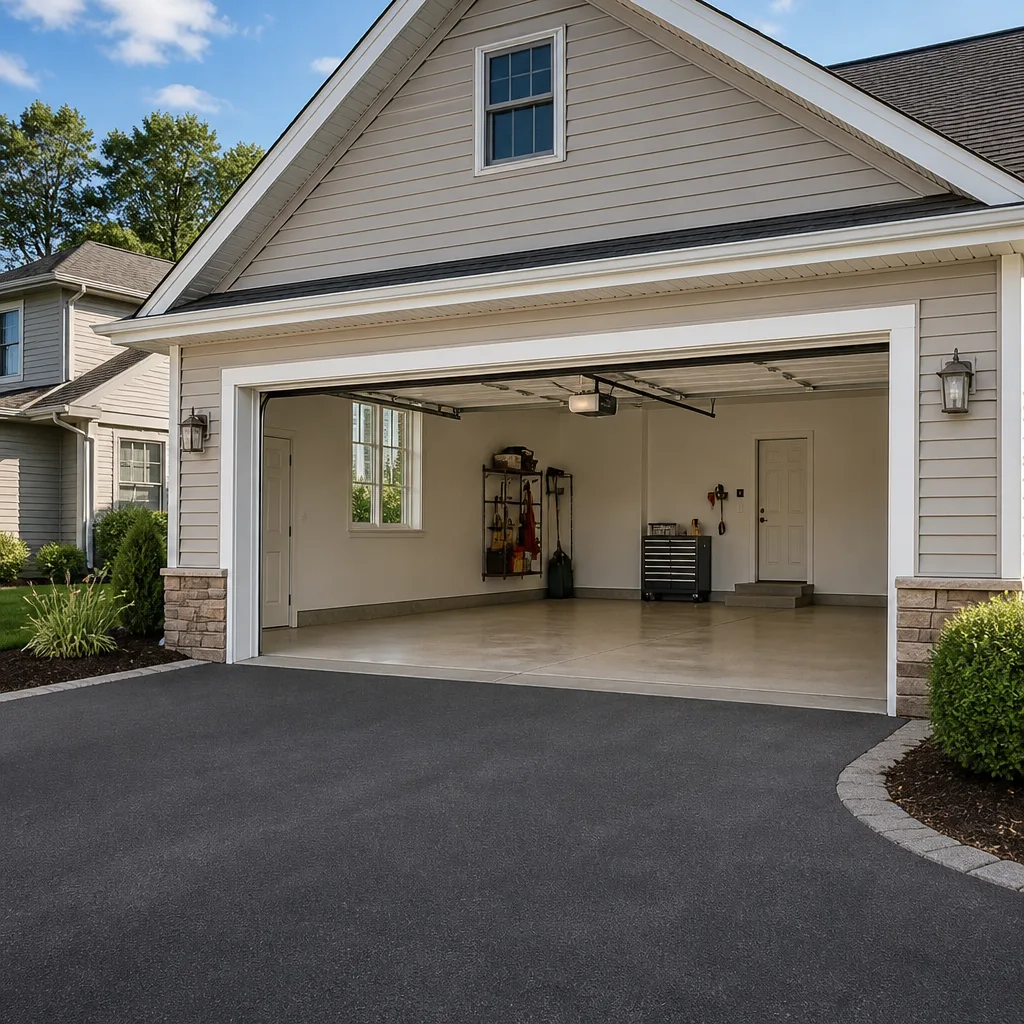 LiftMaster openers
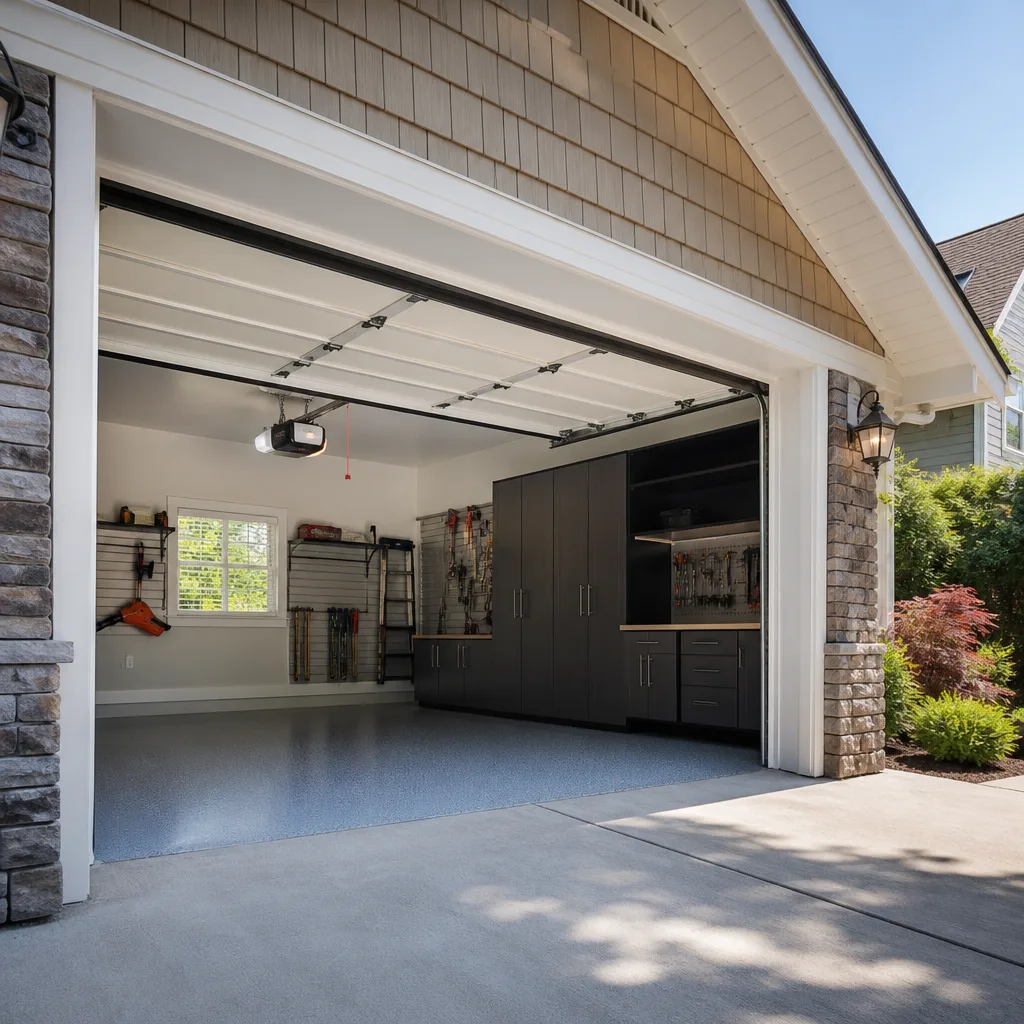 Chamberlain openers
Full 25-point door and opener safety check with every visit - springs, cables, rollers, tracks, and your LiftMaster or Chamberlain opener included
You get a price before we start. It does not change when the truck arrives.
Get your free estimateThe Complete Guide to Garage Door in Irvine
Most Irvine HOAs reserve the right to fine you for a garage door replacement that wasn’t pre-approved, yet fewer than 1 in 5 homeowners check their CC&Rs before buying. That’s not a guess. We see the aftermath every month: a homeowner installs a door they love in a color the HOA never approved, and the compliance letter arrives before the installer’s truck leaves the driveway. This guide maps every decision, from panel material to opener brand to insulation spec, against the actual conditions Irvine homeowners face, and you can find more guides & resources on our blog. You’ll learn what the HOA actually restricts, why the marine layer matters more than you think, and how to choose a system that lasts 15-plus years in this specific climate.
Quick Answer
A garage door in Irvine is a system of five interacting components: the panels, the spring assembly, the tracks and rollers, the weather seals, and the opener. Most Irvine homeowners need either a repair to one component or a full replacement that meets HOA design standards and climate-specific material requirements. The right choice depends on three local factors: your HOA’s design guidelines, your home’s exposure to the marine layer and Santa Ana winds, and the brand of opener already wired into your garage.
Styles & brands we work with
Table of Contents
- How Irvine HOA Standards Shape Your Garage Door Choices
- Why the Marine Layer and Santa Ana Winds Change Your Material Specs
- What New-Construction Irvine Homes Ship With vs. What Lasts
- Brand-by-Brand Opener Compatibility for Irvine Homes
- One Call vs. Multi-Contractor: The Real Math
- Repair or Replace: A Decision Framework for Irvine Homeowners
- Insulation R-Values and What They Mean in Irvine’s Microclimates
- Common Mistakes to Avoid
- When to Call a Professional
- Frequently Asked Questions
How Irvine HOA Standards Shape Your Garage Door Choices
Irvine is the most master-planned city in Orange County. Neighborhoods like Woodbridge, Northwood, Turtle Rock, Westpark, and Portola Springs each carry their own design covenants, and almost all of them classify the garage door as a street-visible architectural element. That means the door isn’t yours to change freely. It’s part of the community’s visual fabric, and the HOA enforces that fabric through a formal approval process.
The most common restrictions we encounter in Irvine involve three things: color, panel style, and window placement. Woodbridge, for example, tends to restrict door colors to a narrow range of earth tones and whites coordinated with the original tract palette. Turtle Rock homes, many built in the 1970s and 1980s, often carry restrictions that prohibit contemporary full-glass panels or flush steel designs that clash with the neighborhood’s older architectural character. Northwood and newer communities like Portola Springs sometimes allow a broader color range but require that any window inserts be frosted or obscure glass to limit visibility into the garage.
The approval process itself is straightforward once you understand it. Here are the steps in order:
- Pull your CC&Rs and the architectural addendum. The specific garage door language is almost never in the main community rules. It’s in a separate document called the architectural guidelines or design standards. Request it from your HOA management company.
- Identify the exact restrictions for your lot. Some HOAs apply different standards to corner lots, homes on greenbelts, and homes on arterial streets. Your lot position matters.
- Get your contractor’s spec sheet before you pay for anything. You need the exact manufacturer, model number, color code, and a product photo. HOAs reject vague applications.
- Submit the architectural review application with the spec sheet attached. Most Irvine HOAs review within 30 days, but some take up to 60.
- Install only after written approval is in hand. Verbal approvals don’t protect you, and neither does an email from a board member unless it’s an official decision.
If you want a door that falls outside the written standards, a variance is possible but requires justification. Variances in Irvine are typically granted for energy efficiency upgrades, safety improvements, or design changes that match neighboring homes’ existing modifications. The strongest variance applications include photos of similar doors already installed in your immediate area.
Our Garage Door Installation in Irvine work always starts with the HOA question before we talk materials, because the best door in the wrong color is a $4,000 problem.
Why the Marine Layer and Santa Ana Winds Change Your Material Specs
Irvine sits about 8 miles from the Pacific, close enough that the marine layer rolls in most mornings from May through September. That coastal air carries salt and moisture, and it sits on your garage door for hours before the sun burns it off. Inland guides written for Rancho Cucamonga or Corona don’t account for this. In Irvine, it’s the single biggest factor in how long a door’s finish lasts.
Steel doors are the most common material in Irvine, but not all steel is equal. The marine layer accelerates rust on bare metal and on doors with thin factory primer under the paint. We recommend steel doors with a hot-dipped galvanized base coat and a factory-applied baked-on polyester finish. These finishes stand up to the salt exposure far better than field-painted doors, which start showing edge rust within three to five years in the worst marine-adjacent parts of Irvine like Woodbridge near the lakes.
Santa Ana winds hit Irvine from October through March. They bring dry air, heavy gusts, and airborne grit. The wind load on a garage door is significant, and in Irvine’s newer communities near the 133 and 241 corridors, wind funnels through the foothills and hits doors broadside. Here’s what that means for your build:
- Reinforced panel construction. Flimsy 25-gauge steel panels flex and dent under wind load. Look for 24-gauge or thicker, and check that the door has struts or stiffeners horizontally across each panel.
- Heavy-grade bottom seals. The bottom rubber is the first thing to wear in Santa Ana season. Grit gets under the seal, abrades the rubber, and eventually the seal cracks. A heavy T-style vinyl seal lasts years longer than a thin bulb seal.
- Wind-rated track brackets. In exposed areas, jamb brackets that anchor the track to the wall should be upgraded. This is a $40 upgrade during installation that prevents a $600 track repair after a bad wind event.
The combination is what makes Irvine unique. You need a door that resists morning salt moisture and afternoon wind grit, and those two requirements pull in opposite directions. A door that’s optimized only for rust resistance may be under-built for wind. A door built for wind may have a finish that the marine layer attacks. The right door has both: a galvanized base coat for the salt, and reinforced panels for the Santa Anas.
What New-Construction Irvine Homes Ship With vs. What Lasts
Irvine Company developments and newer builders run a tight margin on garage doors. The door that ships with a new tract home in Portola Springs or Orchard Hills is typically a contractor-grade steel door, 26-gauge or thinner, with a basic opener. It meets the builder’s cost targets. It does not meet the 15-year durability standard that most Irvine homeowners reasonably expect.
Here’s the breakdown of what we actually see in Irvine’s new construction:
| Component | What Ships With the House | What Actually Lasts 15+ Years |
|---|---|---|
| Panel Gauge | 26-27 gauge steel | 24 gauge or thicker |
| Finish | Thin factory prime with builder-grade paint | Galvanized base with baked-on polyester finish |
| Insulation | None or R-6 polystyrene | R-12 to R-18 polyurethane |
| Springs | 8,000-10,000 cycle torsion springs | 25,000+ cycle high-cycle springs |
| Bottom Seal | Thin bulb seal | Heavy T-style vinyl seal |
| Opener | Builder-spec chain drive | Belt drive or wall-mount with battery backup |
The most telling difference is the spring cycle rating. Most builder-grade torsion springs are rated for 8,000 to 10,000 open-close cycles. In a house where the garage is the primary entry point, which describes a lot of Irvine households, that’s roughly five to seven years of use. When that spring snaps, the repair is a few hundred dollars, but it’s the first signal that the rest of the door is aging out.
Replacing the door on a new-construction Irvine home before it fails isn’t overkill. It’s the single best way to avoid a cascading series of repairs starting around year six. A door with high-cycle springs, upgraded seals, and a premium opener is the difference between a garage that needs nothing for 15 years and one that needs $1,200 in piecemeal fixes over the same period.
For a deeper look at what’s involved in a full replacement, see our complete installation guide for Irvine homeowners.
Brand-by-Brand Opener Compatibility for Irvine Homes
Irvine homes run a mix of opener brands depending on when they were built and whether a previous owner upgraded. The most common brands we work on across Irvine are Chamberlain, Genie, LiftMaster, and Craftsman. The key idea: your opener doesn’t need to be replaced just because it’s old or a different brand than the company you called. Compatibility is about the drive system, the motor logic, and the mounting hardware. A technician who knows the brand’s design language can diagnose and repair without guessing.
Here’s what we see in Irvine by brand:
- Chamberlain: The most common opener in Irvine tract homes from the 1990s through the 2010s. Chain and belt drives dominate. Chamberlain openers are relatively easy to service because parts are widely available, and the gear-and-sprocket assembly that usually fails is a fifteen-minute swap for someone who stocks it.
- Genie: Common in homes built in the 1980s through the early 2000s, especially in older Irvine neighborhoods like El Camino Real and The Ranch. Genie screw-drive openers are still running in some of these homes after 25 years, but the carriage and screw components wear in ways that require brand-specific parts.
- LiftMaster: The professional line from the Chamberlain group. LiftMaster openers are often installed by contractors on Irvine remodels and new builds. They feature belt drives, DC motors, and battery backup units. A LiftMaster opener is typically paired with a smart home system, which introduces troubleshooting complexity when the Wi-Fi pairing drops.
- Craftsman: Found in homes where the previous owner installed a big-box opener at some point. Craftsman openers cross-reference heavily with Chamberlain parts, so repair is usually straightforward for a technician familiar with both lines.
The point here isn’t that one brand is better than another. It’s that the brand already on your ceiling determines the repair approach. If your garage door opener needs repair in Irvine, the fastest fix comes from a technician who knows the specific model’s failure points rather than someone who’ll tell you to replace it because they don’t carry the parts.
One Call vs. Multi-Contractor: The Real Math
Here’s a scenario we’ve seen repeatedly in Irvine. Your opener starts making a grinding noise. You call Opener Company A. They replace the gear. Two weeks later, the door is stiff and jerky. It turns out the roller bearings are shot, but Opener Company A doesn’t do door work. You call Door Company B. They replace the rollers, then tell you the springs were never properly tensioned for the door’s weight. That’s not their opener. That’s a third call.
The multi-contractor approach costs Irvine homeowners an extra service call on average when the problem crosses the door-opener line, which happens more often than most people expect. The garage door and the opener aren’t separate systems. They’re one mechanical assembly with interdependent wear patterns.
When a door’s springs lose tension, the opener’s motor works harder. That excess load shortens the opener’s gear life. When rollers go dry and stiff, the extra drag translates into chain stretch on the opener. When the track is out of alignment, the opener’s force sensor trips and the door reverses mid-cycle. The homeowner sees an opener problem. The root cause is a door component.
A single company that covers both the door and the opener can diagnose the full system in one visit. That’s the practical argument for a multi-brand specialist. It’s not about convenience. It’s about not paying a $95 diagnostic fee to learn that the actual problem belongs to someone else’s trade.
This is the approach we take on every call in Irvine. We look at the whole system: garage door repair and opener work under one diagnosis.
Repair or Replace: A Decision Framework for Irvine Homeowners
The repair-versus-replace decision should be driven by three things: the door’s age, the condition of its core components, and the homeowner’s timeline. Here’s a practical framework we use:
- Under 8 years old: Repair almost always makes sense. At this age, individual component failures like a broken spring or a worn roller are routine maintenance events, not signs of systemic failure.
- 8-14 years old: The decision depends on what’s failing and at what frequency. If you’ve had three or more repairs in the last two years, the door is telling you it’s in the replacement zone. If this is your first repair, fix it and keep going.
- 15+ years old: Replacement usually beats repair when the repair involves multiple components. A 15-year-old door with a snapped spring and rusted bottom brackets is a candidate for full replacement, especially if the panels are showing marine-layer rust at the edges.
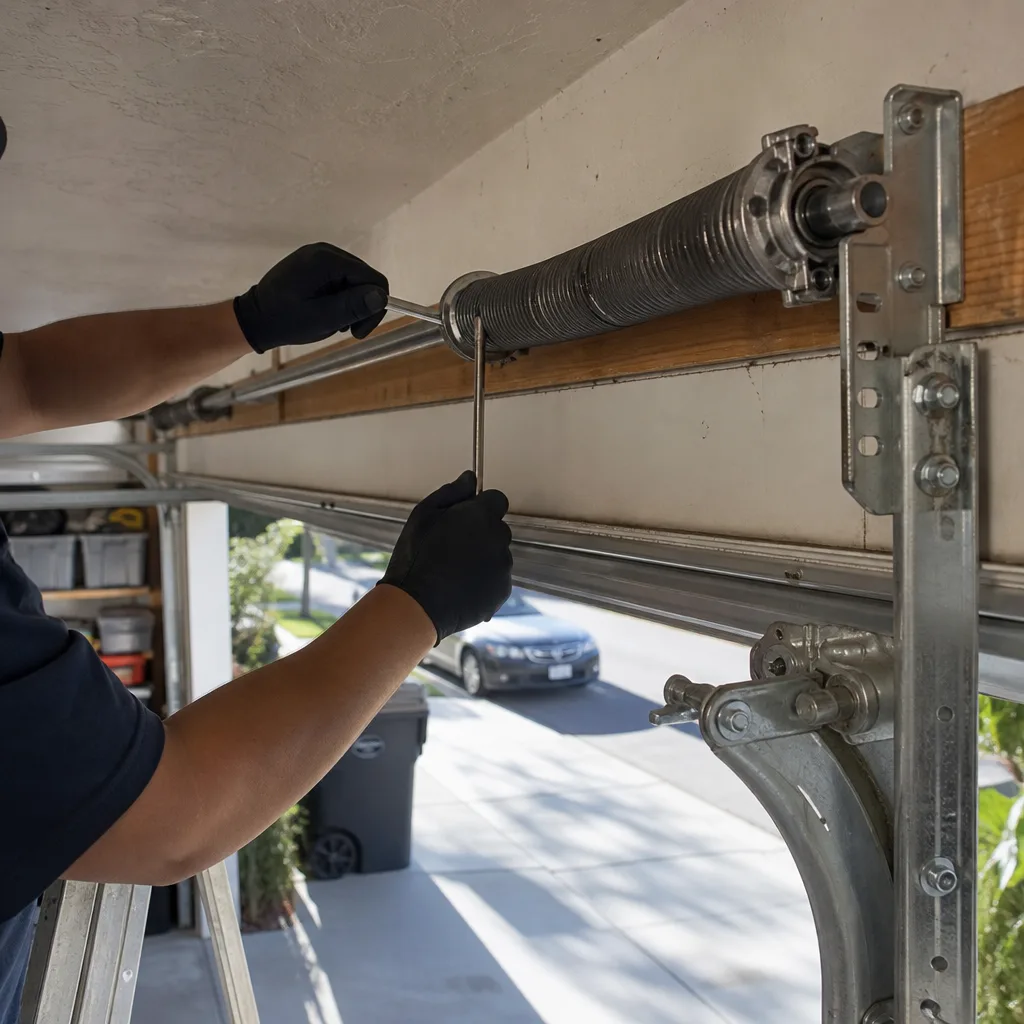
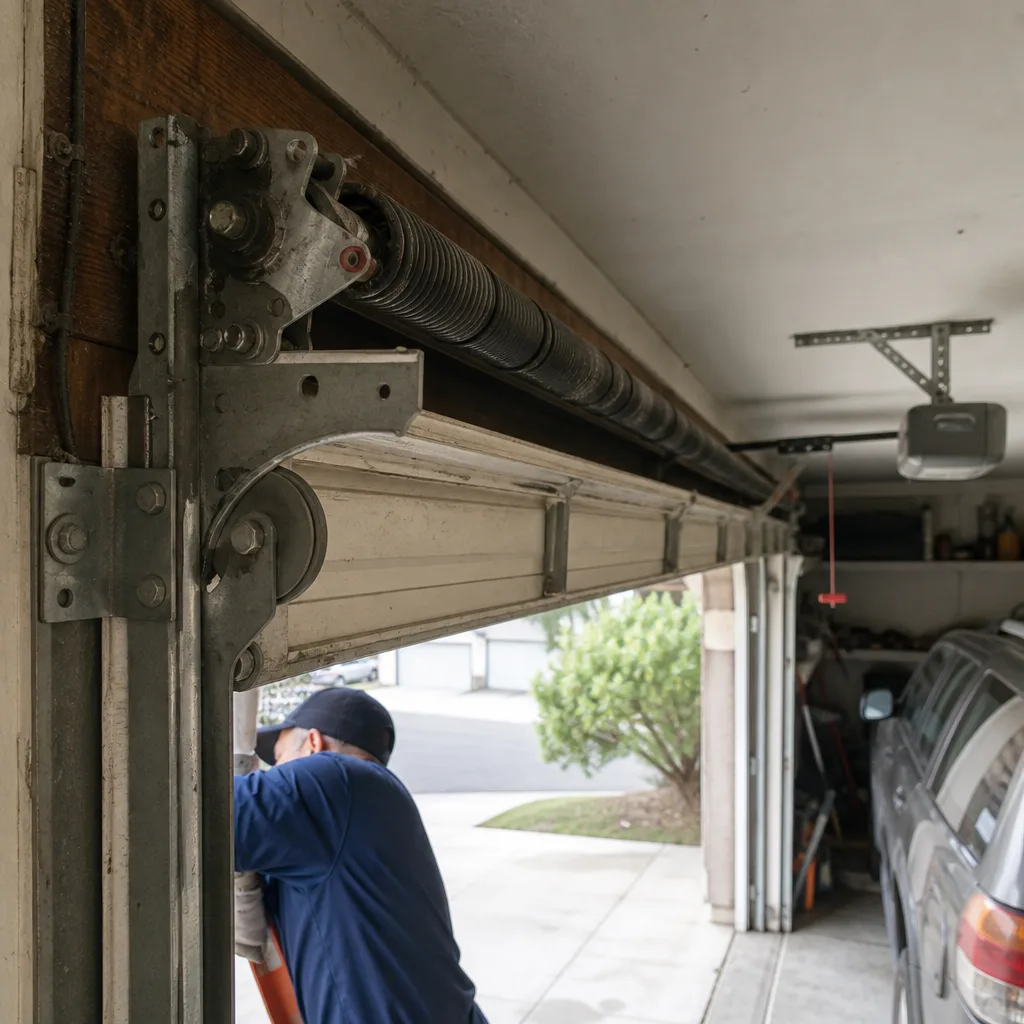
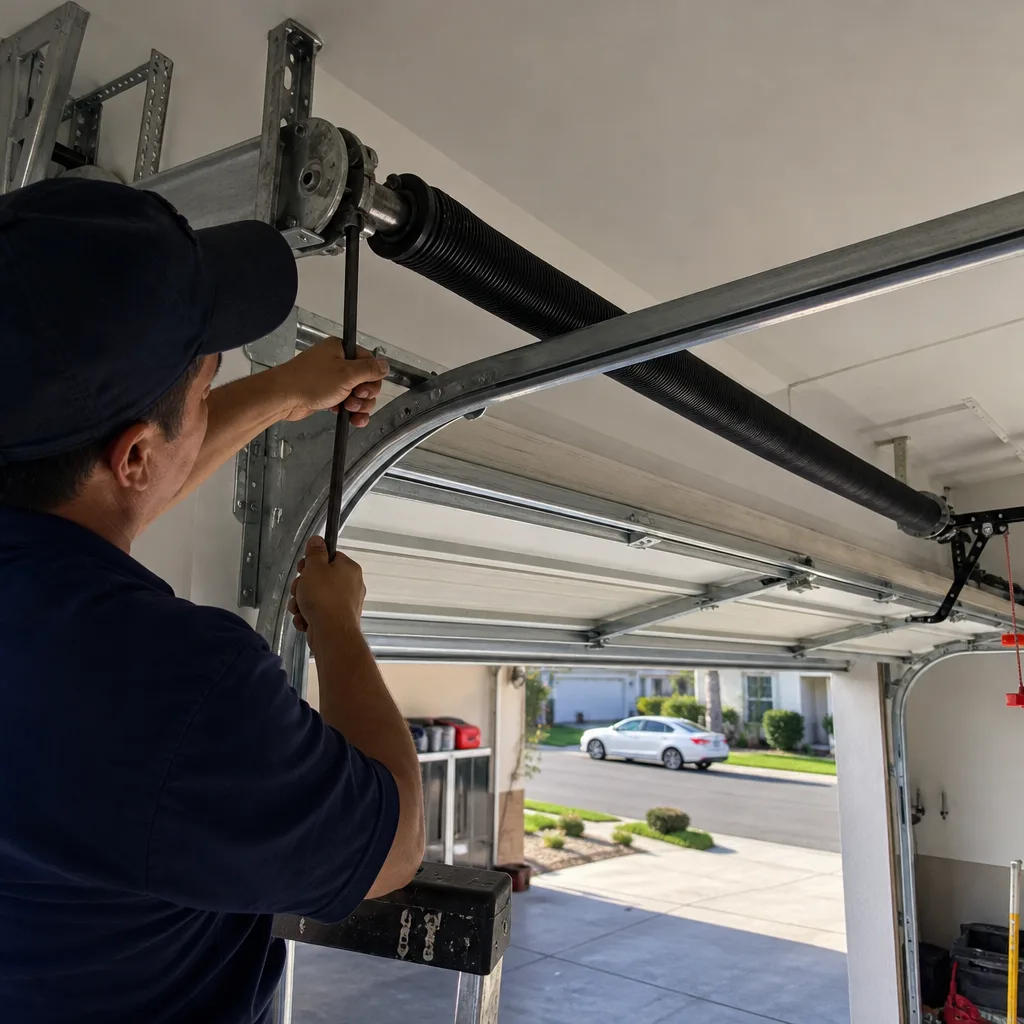
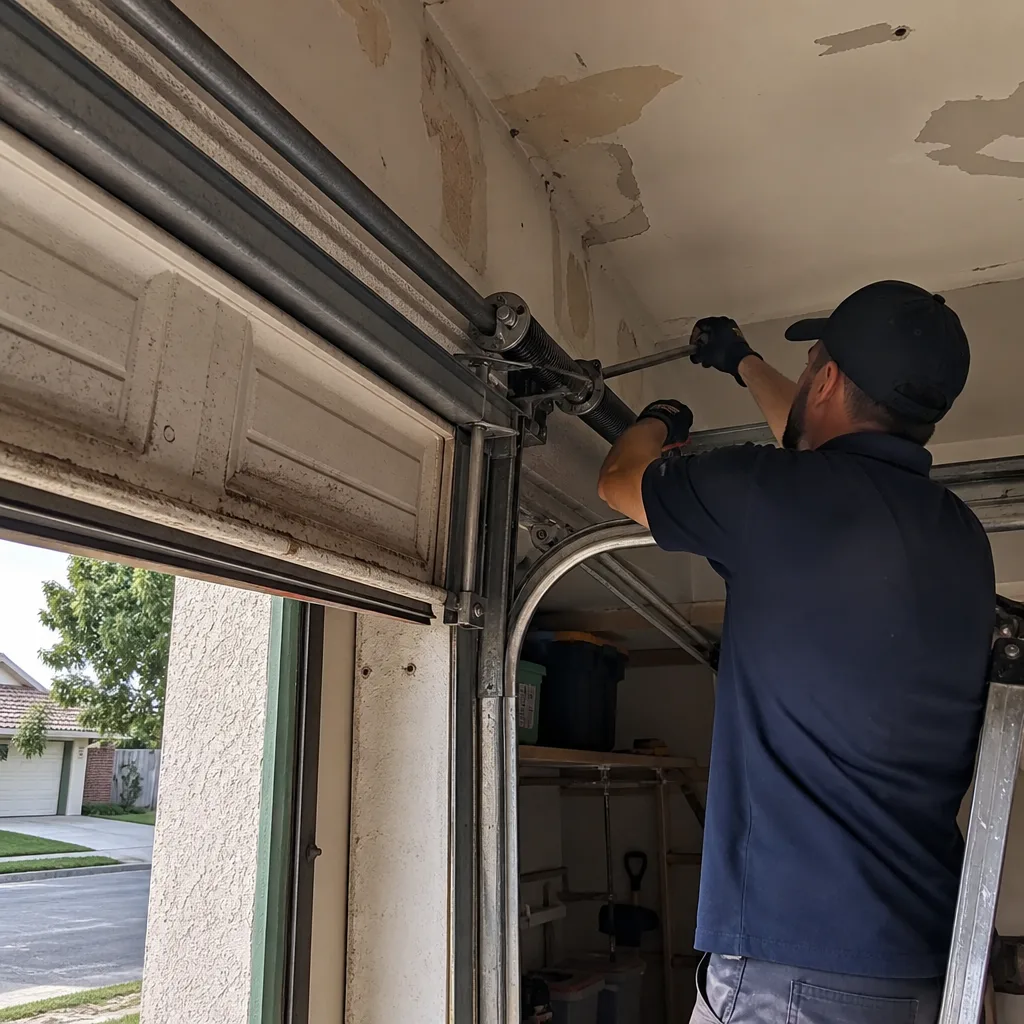
There’s also a safety dimension. A torsion spring under tension stores enough energy to cause serious injury if it releases unexpectedly. We never recommend that a homeowner attempt spring work. The question is whether the spring failure is an isolated event on a young door, which is a straightforward repair, or part of a broader aging pattern. If the door is old and the spring is the second or third component to fail, replacing the door with a system that includes high-cycle springs is the smarter money.
Insulation R-Values and What They Mean in Irvine’s Microclimates
Insulation on a garage door is measured in R-value, which is the door’s resistance to heat flow. Higher R-values mean better insulation. But the right R-value for your Irvine garage depends on how you use the garage and where your home sits.
Irvine’s coastal-adjacent climate doesn’t hit the temperature extremes of Temecula or Palm Springs. Summer highs average in the low 80s, winter lows in the upper 40s. The bigger factor is sun exposure. An east-facing garage door in Woodbridge gets morning sun behind the marine layer, then shade. A west-facing door in Portola Springs bakes in direct afternoon sun from June through September. That west-facing garage becomes a heat sink, and if you have a room above the garage, the heat translates into higher cooling bills.
Here’s a practical R-value guide for Irvine:
- R-0 to R-6: Acceptable for detached garages used only for car storage. The garage will be warm in summer and cool in winter, but it doesn’t affect your living space.
- R-8 to R-12: The sweet spot for most Irvine attached garages. Polyurethane insulation in this range noticeably reduces heat transfer from a west-facing door and keeps the garage usable as a workspace year-round.
- R-13 to R-18: Recommended for garages with a room above, a converted garage, or a home office. The higher insulation also adds panel rigidity, which helps with Santa Ana wind resistance.
Polystyrene insulation is the cheaper option. It’s a rigid foam panel that slides into the door frame, and it typically delivers R-6 to R-9. Polyurethane is sprayed into the door cavity, bonds to the steel skins, and delivers R-12 to R-18 while adding significant structural stiffness. In Irvine, the polyurethane door is the better value for attached garages because it handles both the sun load and the wind load in one package.
Common Mistakes to Avoid
- Skipping the HOA architectural review. Irvine HOAs enforce garage door restrictions through fines and, in some cases, forced removal of non-approved doors. The approval process takes a few weeks and costs nothing. The fine for non-compliance can exceed $1,000. Read your CC&Rs before you buy.
- Choosing a door based on looks alone. A beautiful wood-look door with a poor weather seal rating will show marine-layer damage within three years in Irvine’s coastal air. Material spec matters as much as appearance.
- Replacing the opener without checking the door’s balance. A new opener won’t fix a door that’s out of balance, and running a new opener on a stiff or sticking door shortens its life. Check the door first, then decide on the opener.
- Buying the cheapest spring repair. Low-cycle springs rated for 8,000 cycles fail in five to seven years under heavy Irvine household use. High-cycle springs rated for 25,000 cycles add modest cost upfront and avoid a repeat repair.
- Ignoring the bottom seal. The bottom seal is the cheapest component on the door and the one that fails most often. A torn seal lets in dust during Santa Ana season, moisture during the marine layer months, and pests year-round.
- Mixing brands without checking compatibility. Some smart openers only work with specific wall controls or app integrations. Confirm compatibility before assuming one brand’s parts work with another’s system.
When to Call a Professional
Torsion springs under tension are genuinely dangerous. If your spring is broken, the safe move is to keep the door closed and call someone who handles springs daily. The same applies to cables, which route through high-tension brackets that can release suddenly. Track realignment and opener gear replacement are mid-level repairs that some handy homeowners attempt, but the risk of doing them wrong is a door that falls or an opener that strips its gear within months, as covered in our DIY vs Professional Garage Door: The Irvine Homeowner’s Decision Guide.
Redstone Garage Door Repair offers free estimates in Irvine. Call (855) 492-3366 and we’ll walk you through what’s failing, what it costs, and whether repair or replacement is the right call. No obligation, no pressure.
Frequently Asked Questions
A basic single-car steel door in Irvine typically runs $900 to $1,500 installed, while a double-car insulated door with a premium finish runs $2,500 to $4,500. The price depends on panel thickness, insulation, window inserts, and hardware. Your HOA’s approved color and style range may also affect availability. Call (855) 492-3366 for a free estimate.
No. Most Irvine HOAs classify garage doors as street-visible architectural elements and require approval before replacement. Installing without approval can result in fines or a demand to reverse the installation. Check your CC&Rs’ architectural guidelines before committing to a door.
Standard torsion springs rated for 8,000 to 10,000 cycles last roughly five to seven years in households that use the garage as the primary entry. High-cycle springs rated for 25,000 cycles or more last 12 to 15 years. Irvine homes with attached garages and active families tend to cycle the door 4 to 6 times daily.
The best opener is the one that’s compatible with your existing system and meets your needs for noise, smart features, and battery backup. Chamberlain and Genie are common in older Irvine tracts, while LiftMaster is common in newer builds. A brand-agnostic technician can service whichever opener is on your ceiling.
The marine layer deposits salt-laden moisture on your door surfaces during the morning hours from May through September. Over years, this accelerates edge rust on doors with thin or damaged finishes. A galvanized base coat with a baked-on polyester finish resists this far better than a field-painted door.
One company can handle both. The door and opener are interdependent systems, and diagnosing them together means the root cause gets found in one visit. Redstone Garage Door Repair covers the full system, so you don’t need to coordinate two contractors for one garage.
The Bottom Line
Your garage door in Irvine lives under three pressures that generic guides ignore: HOA design rules, marine-layer moisture, and Santa Ana wind. The right door handles all three. Start with your CC&Rs, choose a galvanized steel door with real insulation, and pair it with an opener that matches your existing system. If the door and opener are both aging, replace them as one system rather than patching components one at a time. And when something breaks, call a company that works on your brand instead of one that only sells its own.
Written by the team at Redstone Garage Door Repair, serving Irvine since 2015.
See the difference
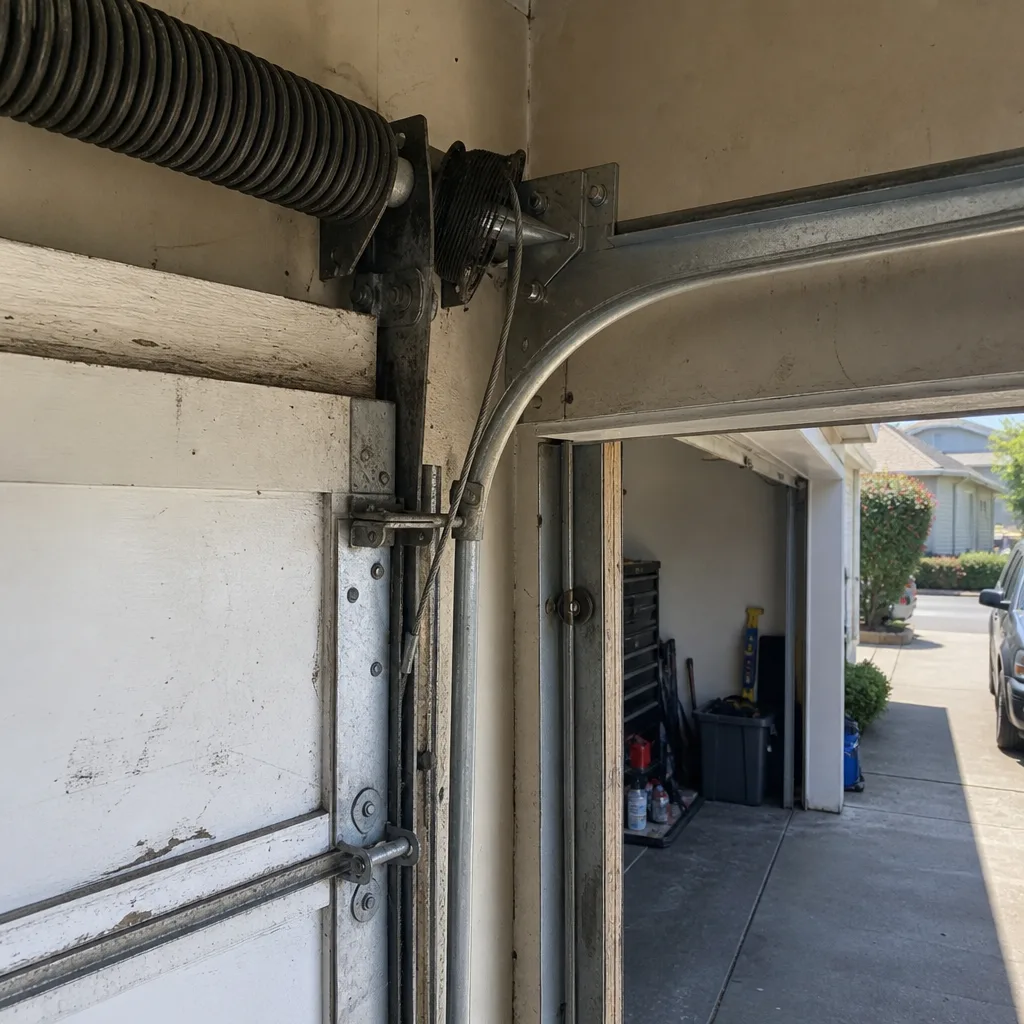 Before
 After
 Before
 After
 Before
 After