

Last updated October 31, 2026
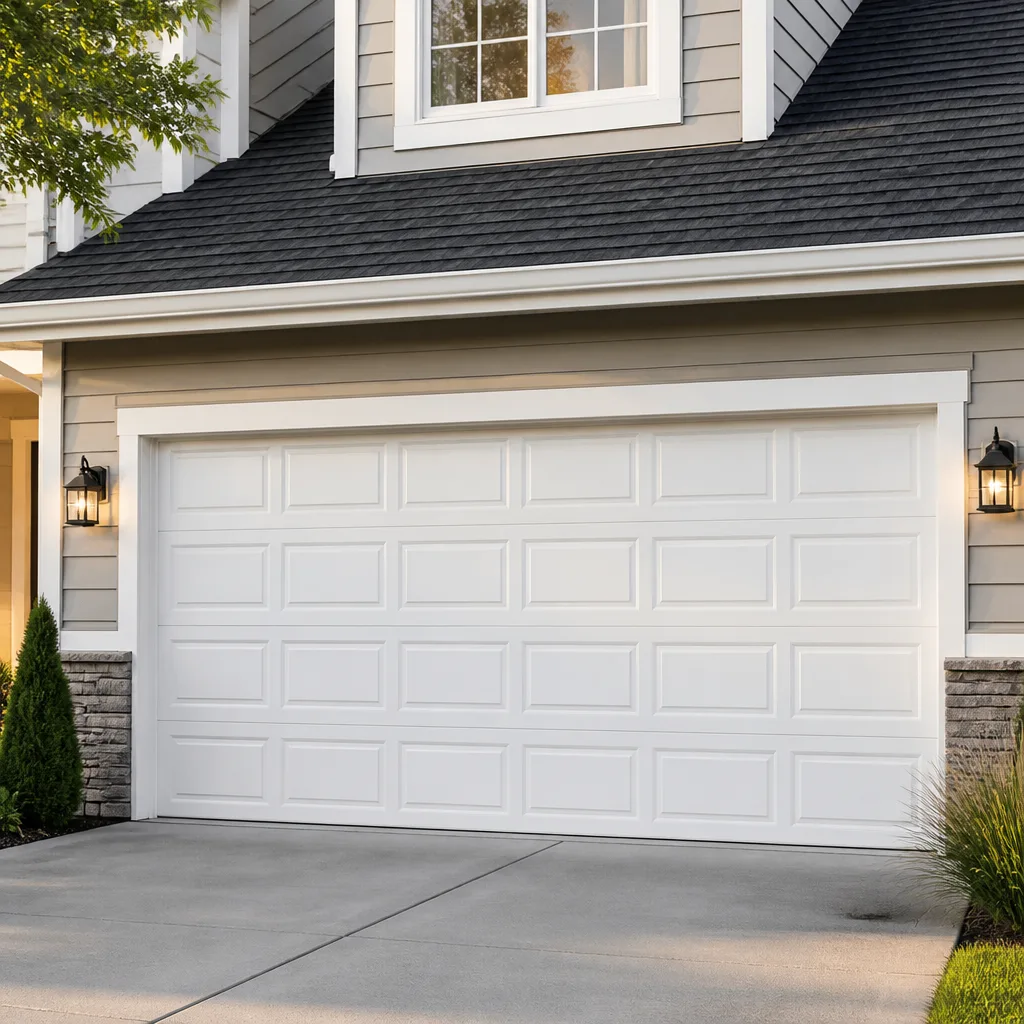 Raised-panel steel
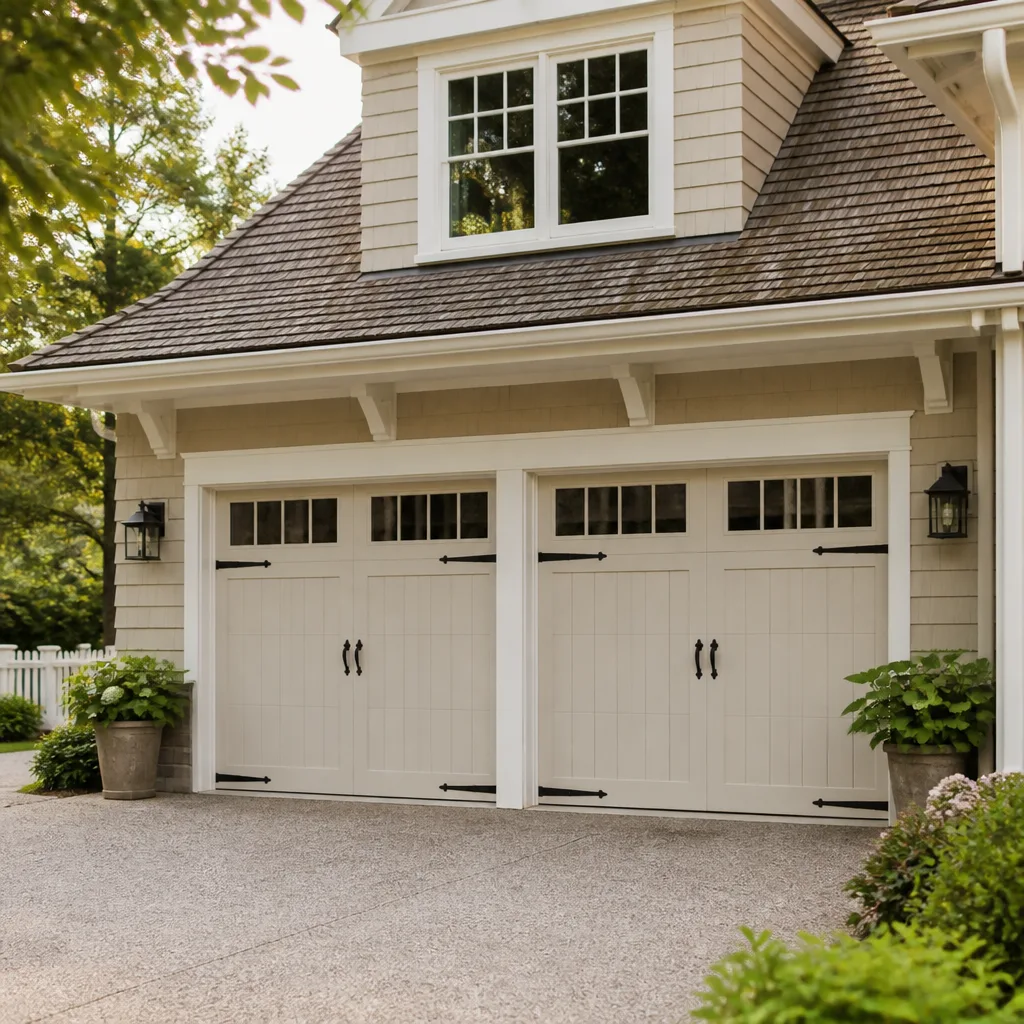 Carriage house
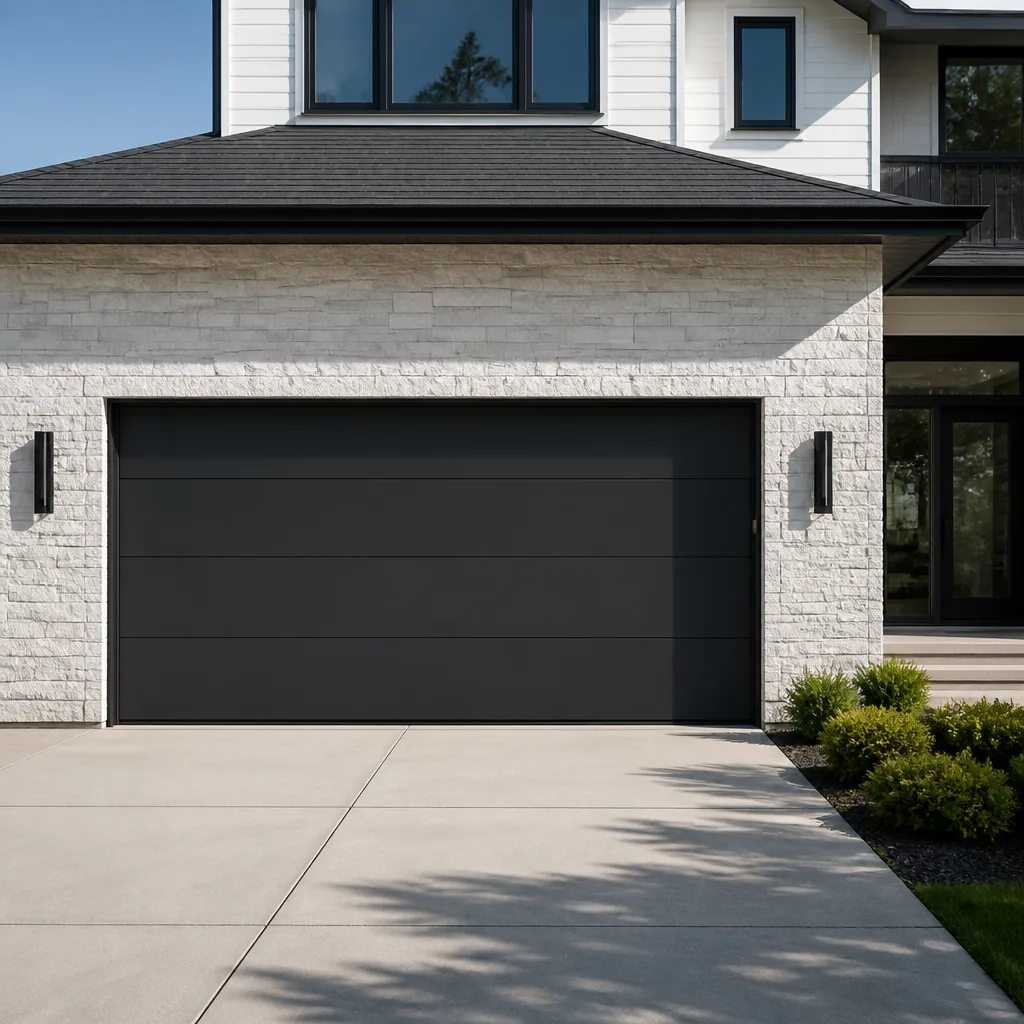 Modern flush
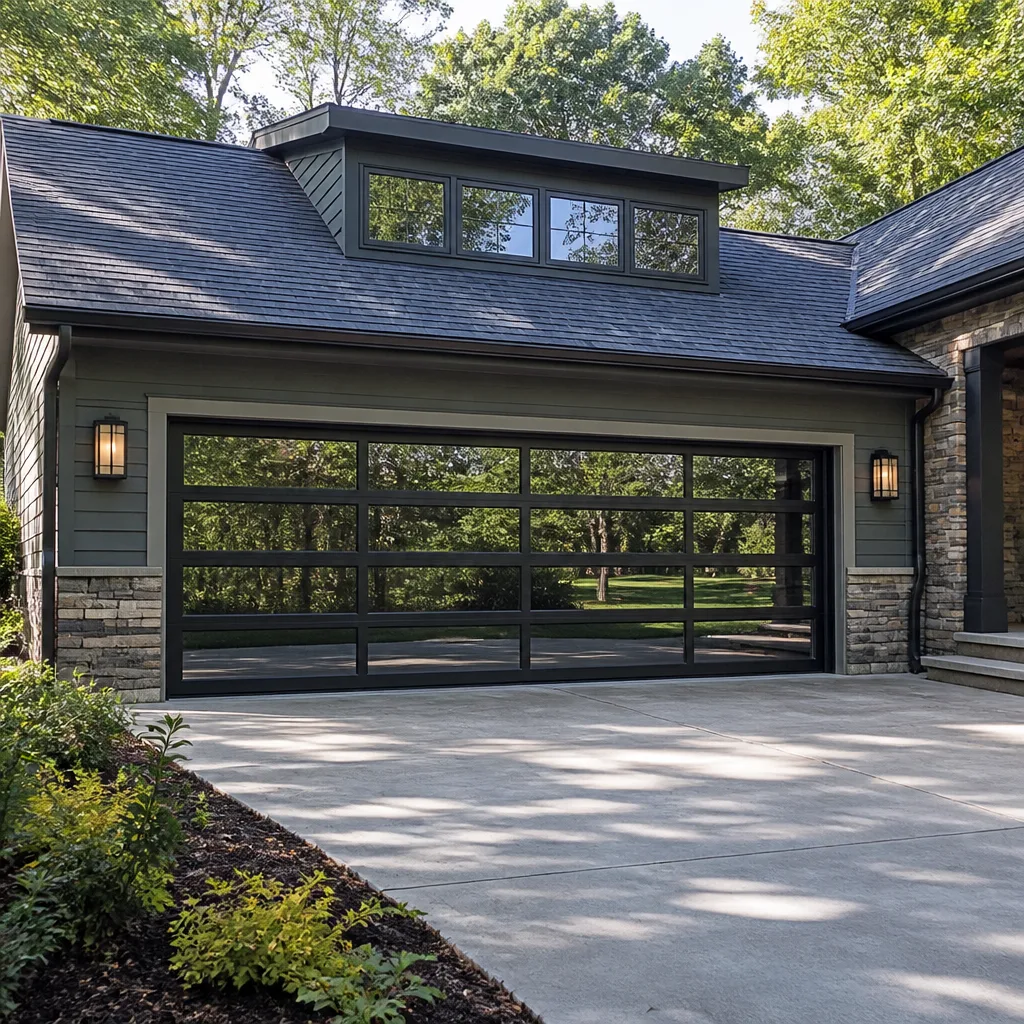 Full-view glass
 LiftMaster openers
 Chamberlain openers
Full 25-point door and opener safety check with every visit - springs, cables, rollers, tracks, and your LiftMaster or Chamberlain opener included
You get a price before we start. It does not change when the truck arrives.
Get your free estimateGarage Door Emergency Preparedness Guide for Irvine Homes
During the 2019 Saddle Ridge fire, thousands of Southern California residents discovered their battery-backup openers were either dead, unprogrammed, or – most dangerously – they didn’t know how to manually release the door at all. Irvine sits in a zone where three distinct emergencies can strike without much warning: earthquakes along the Newport-Inglewood fault, Santa Ana wind-driven fire evacuations, and rolling power outages during heat waves. Most homeowners have a flashlight and a first-aid kit, but almost nobody has drilled the one mechanical skill that could trap their vehicle behind a two-hundred-pound door. This guide walks through exactly what to check, practice, and install so your garage door works when nothing else does, and points you to Garage Door Repair Troubleshooting: Common Problems and How to Fix Them for deeper problem-solving.
Quick Answer
Preparedness for a garage door emergency in Irvine means three things: knowing how to manually release your opener in under 60 seconds, having a working battery backup when the power dies, and knowing which structural components to inspect after a seismic event. The most common failure we see is not a broken door – it’s a homeowner who has never pulled the red release cord and freezes when they need to.
Styles & brands we work with
Table of Contents
- Manual Release Operation Under Stress: The 60-Second Drill
- Battery Backup Selection for Irvine’s Power Outage Patterns
- Seismic Bracket and Anchor Inspection: Irvine Code Requirements
- Evacuation Scenario Planning: Getting Your Vehicle Out Fast
- Post-Emergency Inspection: Six Structural Checks Before Trusting the Door Again
- What Actually Happens to Your Opener When Power Drops
- Common Mistakes to Avoid
- When to Call a Professional
Manual Release Operation Under Stress: The 60-Second Drill
Every automatic garage door opener installed in Irvine homes – whether it’s a Chamberlain, a Genie, or a LiftMaster – has a manual release mechanism. It’s the red cord hanging from a trolley on the rail above your car. Pulling it disconnects the door from the opener’s drive system, letting you lift the door by hand. In a power outage, this is your only way out if you don’t have a battery backup. In an earthquake, it’s how you confirm the door can still move freely before you try to open it. The problem is that under stress, people pull the cord the wrong direction, or they pull it while the door is under tension from a partially engaged opener, or they panic because the cord doesn’t look like the YouTube video they half-remember.
The sequence matters more than strength. Here’s the drill we teach Irvine homeowners when we’re out for a garage door opener repair visit:
- Confirm the door is fully closed. If it’s partially open, pushing the wall button once usually re-engages the trolley so you can close it before disconnecting.
- Locate the red release cord. It hangs from the center rail, usually about a foot from the motor head. On some older Genie models it’s a red knob, not a cord. Same function.
- Pull the cord straight down, toward the floor, with one firm motion. Do not pull it sideways. Do not yank it multiple times. One direction: down.
- You’ll hear a click. The trolley disengages. The door is now in manual mode.
- Lift the door by the handle or the bottom edge. It should move smoothly with 10 to 20 pounds of effort. If it’s more than that, stop – the springs are the problem, not the opener.
- To re-engage: pull the cord down again, then press the wall button once so the trolley reconnects on its next cycle.
One Irvine-specific issue we see regularly: homeowners paint their garage ceilings and accidentally paint over the release cord, making it stiff and hard to grip. If your cord feels like a crusty rope, don’t wait for an emergency. Have it replaced. It’s a two-dollar part that can cost you twenty minutes in an evacuation. We also see cords that have been repositioned by a previous owner who wanted them out of sight – sometimes the cord hangs behind the opener motor where nobody can find it without a ladder. Walk out to your garage right now and physically touch the release cord. If you can’t reach it without moving storage boxes, that’s a problem.
Battery Backup Selection for Irvine’s Power Outage Patterns
Southern California Edison’s public safety power shutoff program has made planned outages a seasonal reality in parts of Orange County, and Irvine’s hot-weather demand spikes can trigger unplanned ones. A battery backup on your opener turns a power outage from an entrapment event into a mild inconvenience. It’s the single most useful preparedness upgrade for an Irvine garage, and it’s also the most misunderstood—see our Garage Door Repair Maintenance Checklist for Irvine Homeowners for a full preparedness rundown.
Here’s what actually matters when you’re looking at backup options:
- Integrated vs. add-on. Certain LiftMaster and Chamberlain models have a battery built into the motor housing or a plug-in backup module designed for that specific opener. These are clean, reliable, and self-test on a schedule. Genie makes an aftermarket backup unit for their newer belt-drive models. If your opener is a Wayne Dalton or an older Craftsman, you’ll probably be looking at a universal aftermarket unit – and those are hit or miss for compatibility.
- Real cycle counts. An integrated LiftMaster backup typically delivers 20 to 50 full open-close cycles on a fresh battery when the unit is new. After three years of Southern California garage heat, that number often drops by half. Heat degrades lead-acid batteries faster than anything else, and uninsulated Irvine garages routinely exceed 100 degrees in August. Check your battery’s date code.
- What it will NOT do. A battery backup does not make the door operate at normal speed, nor does it power your lights, your myQ hub, or anything else plugged into the garage circuit. It’s not a whole-garage UPS. It runs the opener motor only, and usually at reduced speed.
- Testing is a quarterly job. Unplug the opener from the wall and run it on battery alone. If it struggles, the battery is aging out. Most manufacturers recommend replacement every two to three years in warm climates.
In our experience in Irvine garages, we’ve replaced more unmaintained backup batteries than failed openers themselves. The battery doesn’t fail dramatically – it just quietly provides fewer cycles until one day it provides zero. If you can’t remember when your backup battery was last replaced, assume it’s due.
Seismic Bracket and Anchor Inspection: Irvine Code Requirements
Irvine sits in a seismically active corridor, and California building code has required earthquake-resistant bracing on garage door systems in certain installations for years. The operative word is “certain” – not every door needs it, and not every installation that required it in the planning stage actually got it installed correctly. For details on when permits apply, read Garage Door Permits, Codes & Inspections in CA: What You Need to Know. Homeowners can’t easily verify this themselves, but there are visual checks that reveal major problems.
What you’re looking for:
- Horizontal reinforcement struts. On sectional doors, these are metal channels bolted across the interior face of the door, anchoring the panel sections to the vertical tracks. If your horizontal track brackets are attached to the ceiling but not structurally tied to the door panels, the door can jump the track during lateral movement. Look for unbolted holes, loose angle iron, or brackets that flex when you push on them.
- Track-to-wall anchoring. The vertical tracks should be lag-bolted into the studs at no more than 24-inch intervals. If you see drywall anchors or wood screws where lag bolts should be, that’s a red flag – and it’s more common than it should be on newer Irvine construction where builders are under schedule pressure.
- Spring line condition. In a seismic event, the torsion spring shaft can shift, which changes the door’s balance point and puts uneven load on the bearings. If the door opens slower on one side or the spring shaft looks off-center after an earthquake, don’t operate it automatically until a pro has looked at it.
- Low-headroom and high-lift setups. Many Irvine homes with raised ceilings or plumbing obstructions use modified track systems. These are more sensitive to lateral movement because the load paths are longer. If your door has extra track curves, make sure every bracket is tight.
One honest note: we’ve seen doors in Irvine that have been through multiple moderate quakes without any visible damage and continued working fine. The danger is not that every earthquake will destroy your door. The danger is that seismic movement loosens one bracket, the door operates normally for months, and then a torsion spring snaps because the balance shifted. The earthquake doesn’t hurt you that day – it sets up a failure six months later. That’s why a post-event bracket check is worth your time.
Evacuation Scenario Planning: Getting Your Vehicle Out Fast
The Saddle Ridge fire evacuation in 2019 forced residents to leave in minutes, not hours. In that scenario, a garage door that won’t open isn’t just inconvenient – it’s a wall between your family and the car. The goal is to be able to access a vehicle trapped behind a failed door in under three minutes without tools. Three minutes is the number we use because evacuation orders typically give you ten to fifteen, and the garage door is only one part of what you need to do. If the door takes five minutes, you’ve used up your buffer before you’ve loaded anyone into the car.
Here’s a scenario drill to run through once, mentally first, then physically:
- Assume the opener is dead – either the power’s out or the opener failed mechanically. You’re in the garage. The car is inside. The door is closed.
- Reach the release cord. This should take you under ten seconds. If you have to move boxes or climb on a ladder, you fail this step. Clear the path to the cord.
- Pull and lift. Disconnect the trolley, grip the door, and lift. You should have the door open to at least four feet within thirty seconds. Higher is better – you want the car’s roof to clear it.
- Back the car out. Do not try to close the garage door behind you. It doesn’t matter. In an evacuation, the door stays open.
- If the door won’t lift manually – if it’s jammed, if the springs failed and it’s too heavy, if a panel is off the track – abandon the door. Use the front door and the other vehicle if one exists. Do not try to force a door with a broken spring. You will hurt yourself.
- Practice this once per year. Fire drills are annual for a reason. This takes five minutes the first time and becomes muscle memory after that.
One more planning point: many Irvine homes have a second entrance from the house into the garage. If that entrance is blocked or if the garage is filled with storage to the point where you can’t reach the release cord, your three-minute plan is already dead. Keep the path to the cord clear. We tell this to homeowners during garage door installation consults and most of them nod and then stack boxes there again. Be the exception.
Post-Emergency Inspection: Six Structural Checks Before Trusting the Door Again
After an earthquake, a power outage, or any event that put the garage door through stress, you need to run through a quick structural checklist before letting the opener do its thing. If you skip this, you risk sending a door off its tracks under automatic power, which is when serious injuries and expensive damage happen. Here are the six checks we run on Irvine doors after any notable event:
- Visual track check. Stand inside the garage and look down each vertical track from top to bottom. Look for gaps between the track and the wall, bent sections, or any place where the rollers aren’t seated in the track’s channel.
- Roller movement. With the door in manual mode, lift it slowly and watch each roller. A roller that’s wobbling, seized, or popping out of the track indicates a bracket is bent or the track has shifted. This is a common aftermath of even mild seismic movement.
- Balance test. In manual mode, lift the door to waist height and let go. A properly balanced door holds position. If it drops or rises, the spring tension has changed – either from spring damage or from the shaft shifting. This is a sign to call a garage door repair tech in Irvine before running the opener.
- Spring visual. Look at the torsion spring above the door. Cracks, rust scale, or a visible gap in the coil means the spring is compromised. Do not touch it. Do not operate the door. High-tension springs can release violently and cause serious injury. This is a professional-only repair.
- Bracket tightness. Push on each track bracket with your hand. If any bracket moves against the wall or ceiling, it’s pulled loose. A loose bracket under opener power is a derailment waiting to happen.
- Opener logic recheck. If power was restored after an outage, run the opener through a full open-close cycle while watching the door. Listen for grinding, hesitation, or uneven movement. If the opener’s safety sensors were jostled, the door may reverse unexpectedly – that’s a sensor alignment issue, not a door problem.
This entire sequence takes about fifteen minutes. It’s the difference between catching a bent track before it derails and having a two-hundred-pound door fall in the middle of your garage. We recommend running it after any earthquake over 4.0 that you feel in Irvine, and after any power outage longer than a few hours.
What Actually Happens to Your Opener When Power Drops
There’s a folk belief that a power outage damages or “resets” a garage door opener in some harmful way. The truth is less dramatic. Most openers made in the last twenty years store their travel limits, force settings, and remote codes in non-volatile memory. A power loss doesn’t erase anything. When power returns, the opener boots up, runs a self-test, and operates normally. If your opener is a Genie from the mid-2000s or a Chamberlain from earlier than that, there’s a small chance the unit will need to re-learn its travel limits, but that’s rare and usually only happens if the battery backup also failed during the outage.
The real risk from a power outage is not electronic – it’s mechanical. If you have a belt-drive Chamberlain that’s been running with a misaligned track for months, the sudden stop-and-start of power restoration can push something loose. If your opener’s force settings were already too high, the restored power sequence can slam the door against the floor or the stops. The power doesn’t cause damage by itself; it exposes existing problems.
This is also where battery backups earn their keep in an Irvine-specific way. Rolling blackouts during heat waves rarely last more than a few hours, but a garage without backup means you’re getting in and out of your car in the dark, with a hand-lifted door, every time. If your home is one of the many Irvine properties with a one-car garage used for storage and the car parked outside, you may not care. If your car lives in the garage, a backup unit is the most practical single upgrade you can make. We install and service these on both LiftMaster and Chamberlain systems, and the difference is noticeable the very first outage.
Common Mistakes to Avoid
- Never testing the manual release until the emergency. The time to discover your release cord is painted to the rail or hung behind the motor is not during an evacuation. Test it quarterly. This is the single most common and most easily fixed mistake we see in Irvine.
- Assuming the battery backup lasts forever. Backup batteries in Irvine garages age out in two to three years because of heat. If your unit was installed when the home was built and never touched since, treat it as absent.
- Stacking storage boxes under the release cord. The path to the cord must stay clear. If you can’t reach it standing flat on the ground, it’s not an emergency exit anymore.
- Forcing a door that won’t lift. When a door resists manual lifting, the problem is almost always the springs or the tracks, not the opener. Forcing it compounds the damage and creates the risk of a falling door.
- Ignoring looseness after a quake. A loose bracket or a wobbly roller doesn’t self-correct. It gets worse under repeated use. After any felt earthquake in Irvine, spend fifteen minutes on the six-point inspection above.
- DIY spring work. Torsion springs are under several hundred pounds of tension and can cause fatal injuries when they release unexpectedly. No amount of YouTube confidence makes this a homeowner job. If the spring is broken, call a pro.
- Using the garage as a primary storage wall. In many Irvine homes, the garage is halfway to a storage unit. Boxes leaning against the tracks, the wall button, or the release area are all liabilities when time matters.
When to Call a Professional
Some garage door emergencies are mechanical and require a trained technician with the right tools and parts knowledge. If your torsion spring has snapped, if the door has come off its tracks, if a cable is frayed or severed, or if your opener is making a grinding noise it never made before, stop using the door and call for service. Continuing to operate a door with a compromised spring or track puts the door, the opener, and anyone nearby at risk. After an earthquake, if your balance test fails or you find a bent bracket, that’s also a service call – not because you can’t see the problem, but because the underlying cause may not be visible without disassembling the door. Redstone Garage Door Repair offers free estimates in Irvine – call (855) 492-3366 and a technician will tell you exactly what’s wrong and what it’ll take to fix it, before any work starts. If your door is still functional but you want a pre-season preparedness check – release cord replacement, backup battery testing, bracket inspection – we handle that too, and we work on the brand you already own.
See the difference
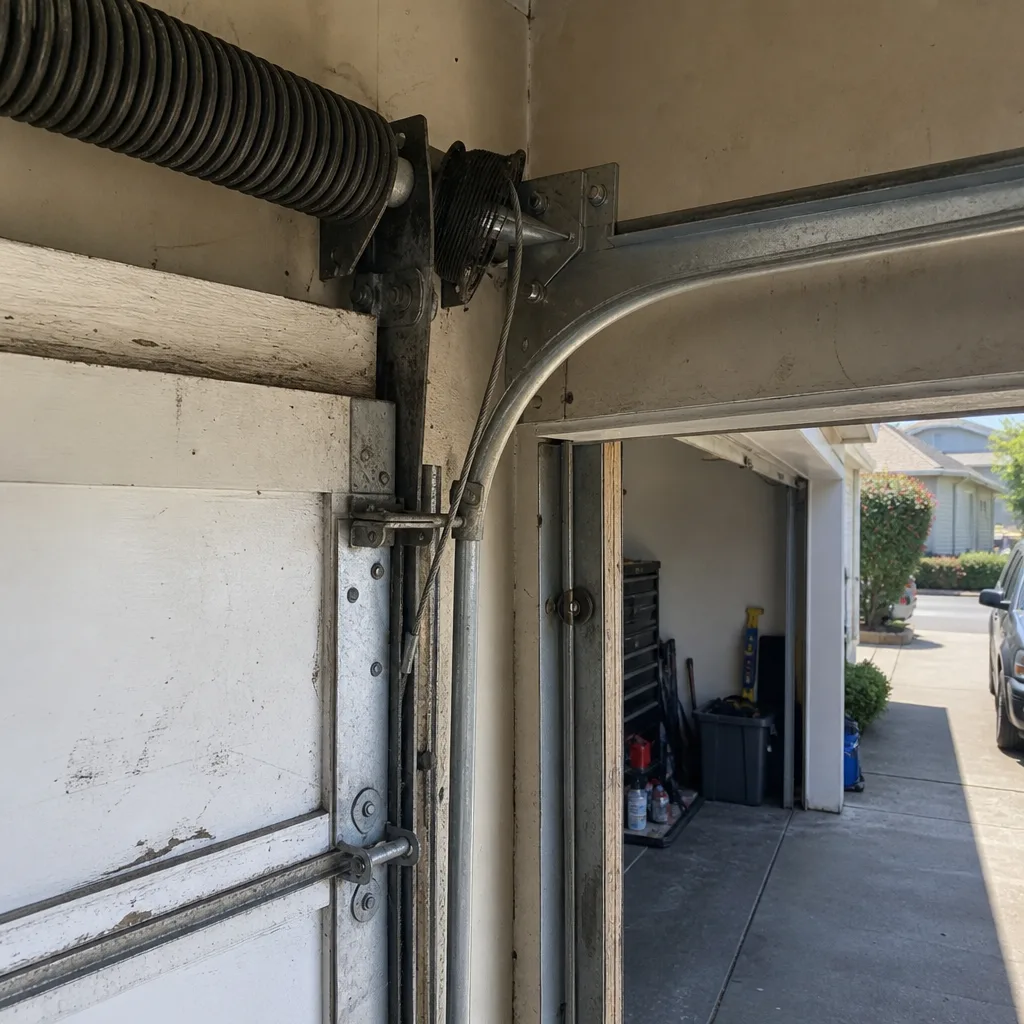 Before
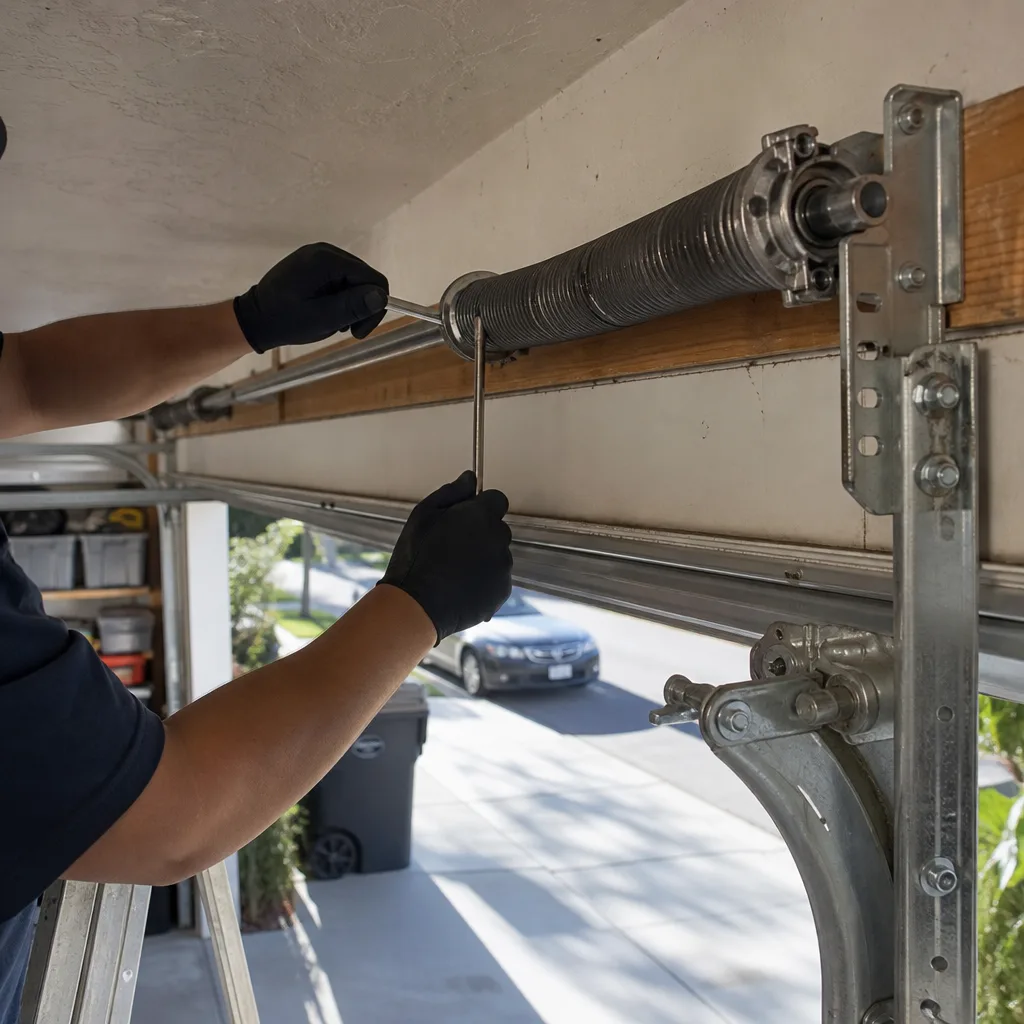 After
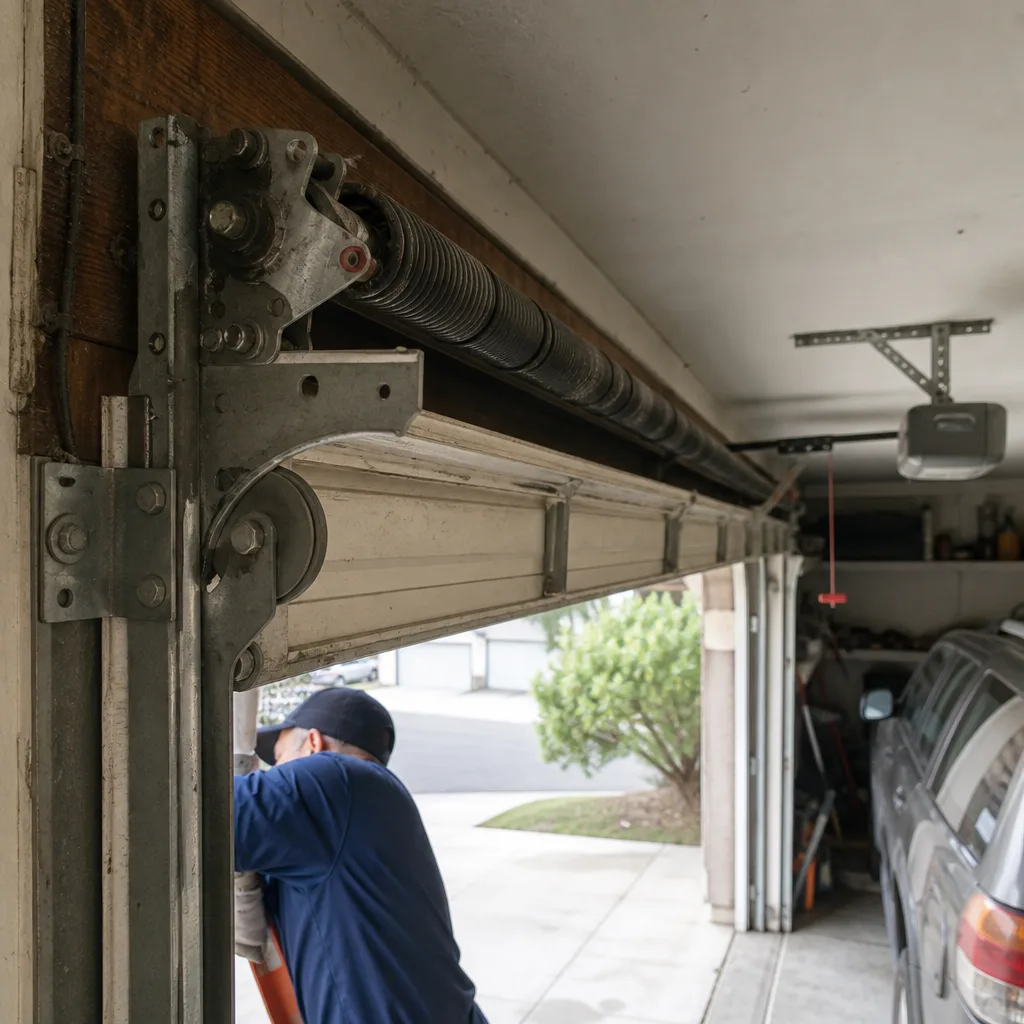 Before
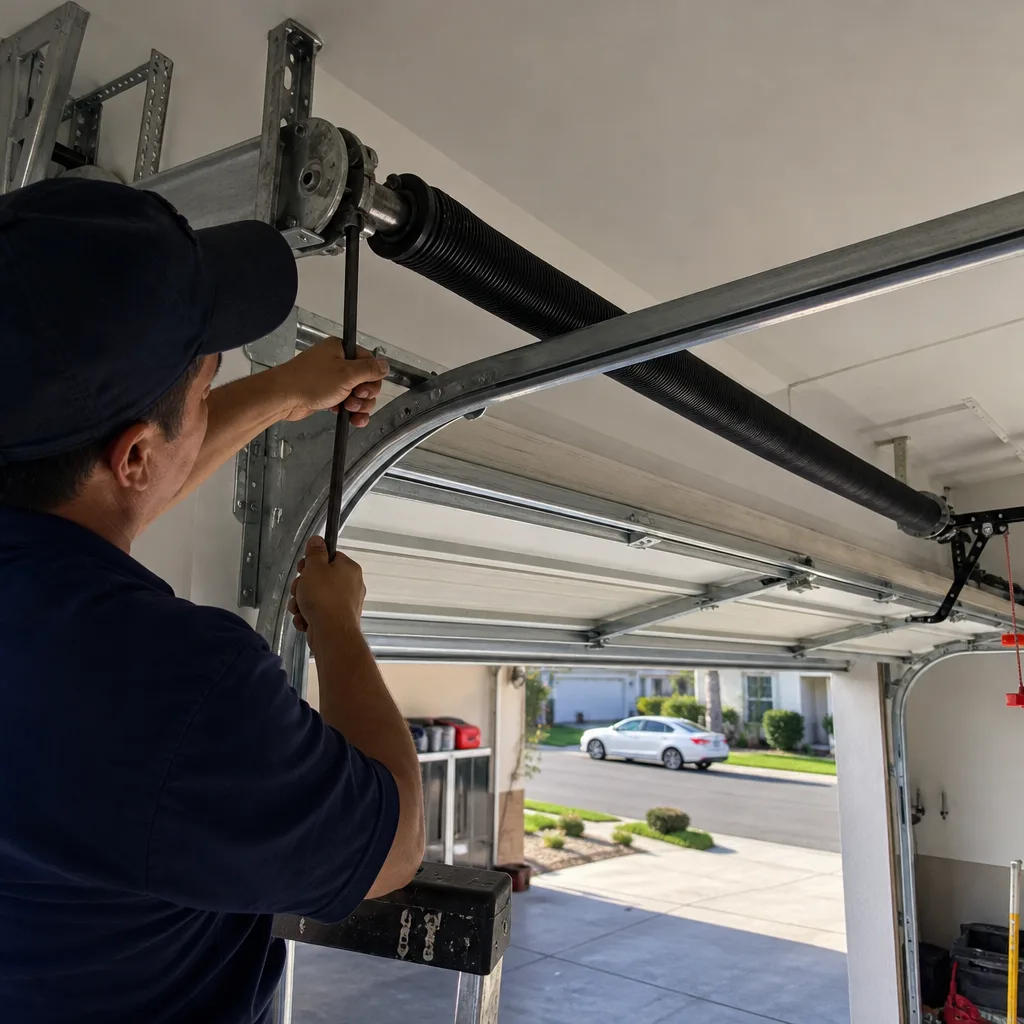 After
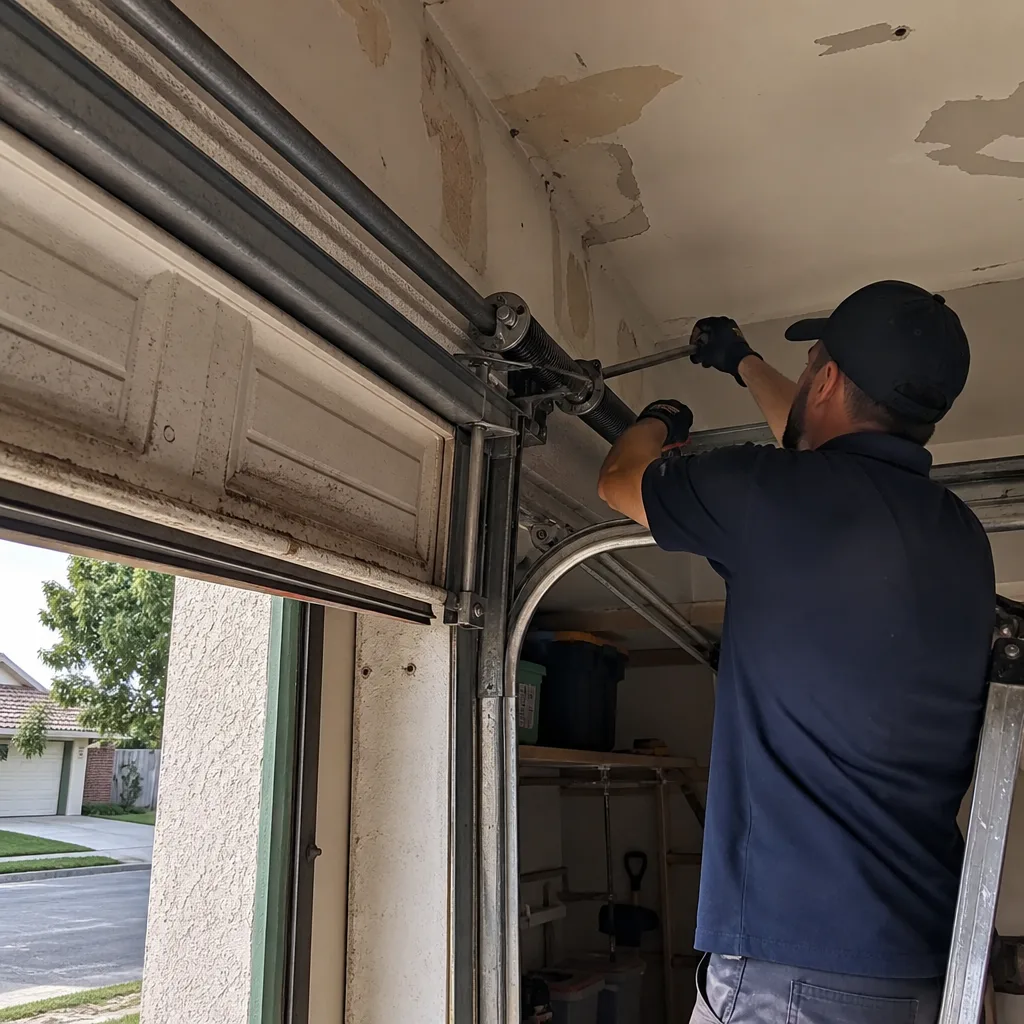 Before
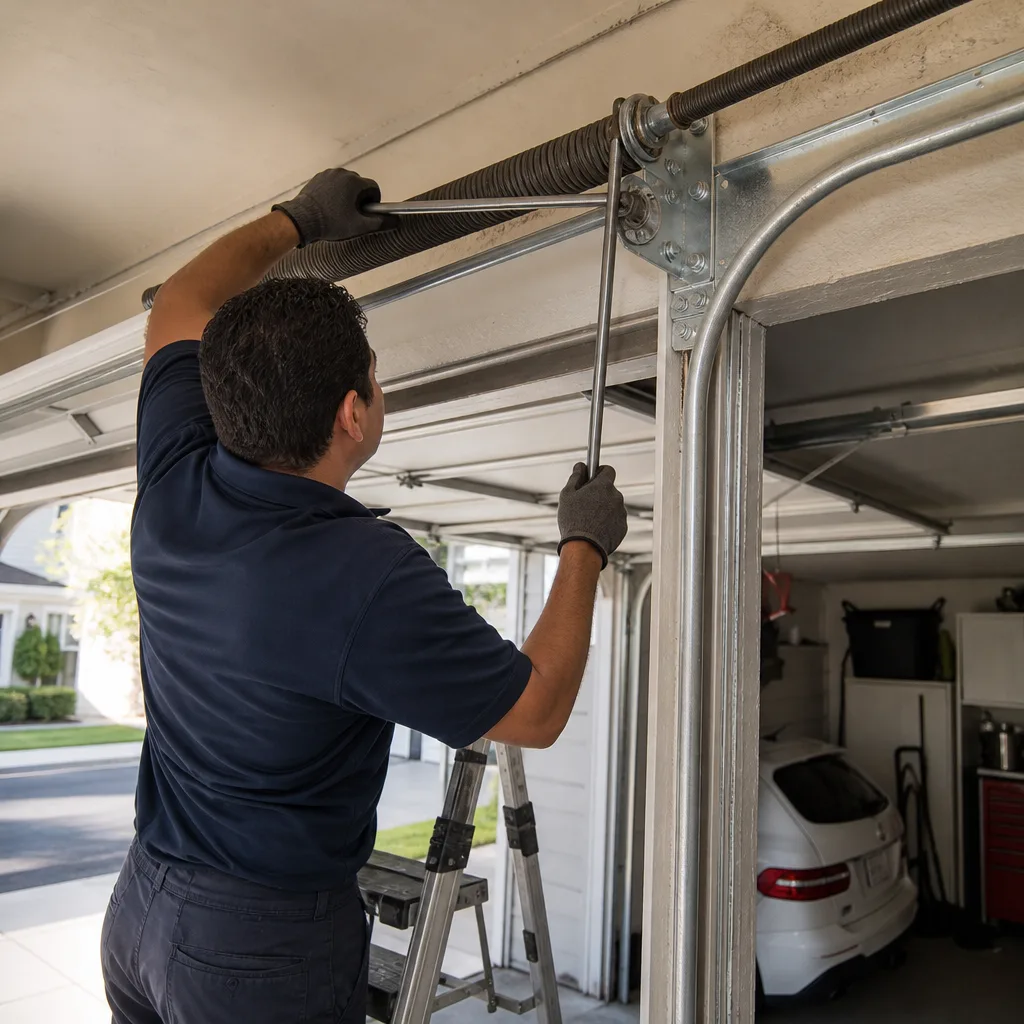 After
Frequently Asked Questions
Integrated backup modules for LiftMaster and Chamberlain openers typically run $150 to $350 with installation in Irvine, while a full opener replacement with a built-in backup is more. The price is quoted and agreed before any work starts. Call (855) 492-3366 for a written estimate – we’ll tell you exactly what fits your existing opener.
For emergency repair calls – broken springs, derailed doors, failed openers – we prioritize same-day service for Irvine homes. Installations and new door projects are scheduled after a free measurement. Call (855) 492-3366 and we’ll tell you what your situation is and what timeline makes sense.
No. We quote the repair price after we see the door and confirm the diagnosis. The price you’re quoted is the price you’ll pay, agreed before any work starts. No surprises on the invoice.
We stock springs, cables, rollers, hinges, sensors, and backup batteries for the major brands we service – including Genie, Clopay, Amarr, and Wayne Dalton systems – which means most Irvine repair jobs are completed in one visit. If a door is unusual or has been out of production for years, we’ll tell you upfront what needs to be ordered.
First, visually inspect the door from a safe distance without standing under it. Then run the six-point checklist described in this guide: tracks, rollers, balance, spring condition, brackets, and opener logic. If the balance test fails or anything looks shifted, call us before running the door automatically. A door that operates while out of balance can derail and fall.
We service and install the major brands found in Irvine garages: LiftMaster, Chamberlain, Genie, Clopay, Amarr, Wayne Dalton, Craftsman, and Raynor. The point is that we work on the brand you already own – not one brand we’d prefer to sell you. One call, full fix for both door and opener.
The Bottom Line
Irvine’s emergency profile – earthquakes, fire evacuations, and rolling blackouts – makes garage door preparedness a practical necessity, not a niche hobby. The skills are simple: know where your release cord is and how to use it, verify your battery backup actually works, and run a structural check after anything that shakes the ground or cuts the power. Most garages we visit in Irvine fail at least one of these checks, and the fix is almost always cheap when caught early. Walk out to your garage, touch the release cord, test the backup, and if anything doesn’t feel right, call us. For more guides & resources, visit our blog. The hour you spend now buys you minutes when it matters.
Written by the team at Redstone Garage Door Repair, serving Irvine since 2015.